


Forensic Services
Chain of Custody Documentation
Every forensic engagement at Digital Forensics Group follows a rigorous six-step chain-of-custody protocol — included as standard in every service, not as an add-on. It's how we ensure your evidence survives cross-examination.
Why It Matters
Evidence That Can't Be Challenged
In Australian courts, it's not enough to produce digital evidence — you must prove how it was collected, who handled it, and that it hasn't been altered. Without a documented chain of custody, even genuine evidence can be excluded or its weight significantly reduced under challenge.
Our chain-of-custody process follows internationally recognised forensic standards — the same methodology used by law enforcement agencies in Australia and around the world. Every step is documented, every person who accesses the evidence is logged, and every hash is verified.
Dual hash verification at acquisition and post-imaging
Hardware write protection on every extraction — original never altered
Evidence held in monitored, restricted-access secure facility
Every action timestamped, attributed, and documented for court
Powered by Oxygen Forensics
How Oxygen Forensic Detective Generates Chain of Custody Documentation
Oxygen Forensic Detective doesn't just extract data — it generates comprehensive case documentation automatically at every step. Every acquisition produces a timestamped case log, hash verification record, and analyst attribution — creating a court-ready audit trail without any additional manual effort.
Automated hash generation
MD5 and SHA-256 hashes are generated at the point of acquisition and recorded in the case file automatically — tamper detection is built into the tool, not added afterwards.
Timestamped case logs
Every action taken within the software — including tool version, extraction parameters, and completion status — is recorded with exact timestamps, creating a verifiable record of exactly what was done and when.
Structured report output
Oxygen produces structured case reports that document the full extraction process, ready to be attached to court affidavits and reviewed by opposing forensic experts or the court itself.

Dual cryptographic hash verification generated automatically on every acquisition
Countries where this documentation standard is accepted by courts and law enforcement
Evidence Protocol
The Six-Step Protocol
Every piece of evidence follows this documented process — from the moment it arrives to the court-ready report.

Secure Receipt
Device received with photographic documentation of condition. Tamper-evident seals applied immediately upon arrival. A unique case reference is assigned and the chain begins.
Hash Verification
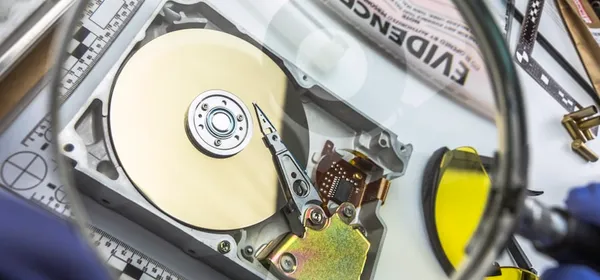
Cryptographic MD5 and SHA-256 signatures are generated from the device before any action is taken. These hash values are recorded and will be verified again after imaging.

Write-Blocked Imaging
Hardware write-blockers are placed between the device and our forensic workstation. A bit-for-bit forensic copy is created. The original device is never modified.

Hash Re-Verification
After imaging, the hash values are recalculated and compared to the originals. An identical match proves the forensic copy is identical to the original evidence.
Controlled Storage
Evidence is held in a secure, CCTV-monitored facility with restricted access. Every person who accesses the evidence is logged with timestamps throughout the engagement.

Court-Ready Report
The final forensic report includes the complete chain-of-custody record — every step documented, timestamped, and signed by the analyst. Suitable for use as evidence in any Australian court.

Get in Touch
Every engagement includes full chain of custody — by default.
Call for a free, no-obligation assessment of your situation. We'll tell you honestly what's possible and what it costs — before you commit to anything.
Practical Guidance
Before You Call Us
A few simple steps taken now can significantly improve what we're able to recover — and how well your evidence holds up in court.
Stop using the device
Every action taken on a phone or computer after an incident can overwrite deleted data. The sooner you stop using it, the better your chances of recovery.
Don't delete anything
Even if messages or files seem damaging, deleting them now can harm your case and may itself be viewed unfavourably by a court. Leave everything as it is.
Do not factory reset
A factory reset makes forensic recovery significantly harder and in some cases impossible. Even if advised by someone else — do not reset the device before speaking to us.
Write down what happened
A brief timeline — what occurred, when, and what you're hoping to find — helps us focus the examination and give you a more accurate assessment on your first call.
Common Questions
Chain of Custody FAQ
01 Why does chain of custody matter in court?
02 Is chain of custody documentation included in every engagement?
03 Can chain of custody documentation be audited?
04 What is a cryptographic hash and why does it matter?
05 What is a write-blocker?
06 What happens if the chain of custody is challenged in court?
Client Feedback
What Clients Say
Real outcomes from real people — names abbreviated to protect privacy.
“Opposing counsel attempted to challenge the integrity of the digital evidence. Every challenge was answered by the documentation — who had the device, what was done, and proof it hadn't been altered. It held up completely.”
Family Law Solicitor
Family Court Proceedings · Brisbane, QLD
“We've run multiple employment matters through Digital Forensics Group. Their chain of custody process means we've never had evidence successfully challenged in a tribunal. That consistency is invaluable.”
HR Director
Fair Work Proceedings · Sydney, NSW
“I needed evidence for a civil dispute that would survive scrutiny. The documentation they provided was thorough, professional, and left no room for challenge. The matter was resolved in our favour.”
B.N.
Civil Dispute · Gold Coast, QLD

Get in Touch
Start Your Confidential Enquiry
Tell us briefly about your situation. We respond within one business day with an honest assessment — no obligation to proceed.
+61 499 475 408
Mon–Fri, business hours AEST
Nerang, Gold Coast QLD
Serving all of Australia & New Zealand